
tempered glass price per square foot
Understanding Precision Thread Gauges A Comprehensive Guide Precision thread gauges play an essential role in ensuring the quality and reliability of threaded components in various manufacturing industries. These specialized instruments measure the size, angle, and form of threads on bolts, screws, and other fasteners, ensuring they meet stringent specifications and standards. In this article, we'll delve into the significance of precision thread gauges, their types, and best practices for their effective application. Importance of Precision Thread Gauges In the manufacturing world, the integrity of threaded fasteners is crucial. Poorly threaded components can lead to assembly issues, structural failures, and safety hazards. Precision thread gauges help maintain high manufacturing standards by verifying the dimensional accuracy of threads. They assist engineers in ensuring that threaded parts fit correctly, function smoothly, and are capable of withstanding mechanical stresses without failure. Quality control is a vital aspect of any production line, and these gauges help streamline the inspection process. By utilizing precision thread gauges, manufacturers can identify and rectify defects early in the production cycle. This not only reduces waste and saves money but also enhances the overall quality of the final product. Types of Precision Thread Gauges There are various types of precision thread gauges, each designed for specific applications and measuring requirements. The most common types include 1. Go/No-Go Gauges These are used to quickly determine whether a threaded component falls within acceptable dimensional limits . A 'Go' gauge ensures that the thread fits correctly, while a 'No-Go' gauge confirms that the thread is not oversized. 2. Thread Plug Gauges These gauges are inserted into a female threaded hole and are used to check the internal threads of a component. They help ensure that the threads are well-formed and meet the required specifications. 3. Thread Ring Gauges Conversely, thread ring gauges are used for measuring external threads, such as those found on bolts. Like plug gauges, these help verify that the external threads meet the necessary tolerances. precision thread gauges 4. Thread Profilers These sophisticated devices analyze the thread's profile, ensuring that the angle and form are within specified limits. They are particularly useful for high-precision applications where minute differences can significantly impact performance. Best Practices for Using Precision Thread Gauges To obtain accurate measurements, it's essential to follow best practices when using precision thread gauges 1. Calibration Regular calibration of gauges is vital to ensure their accuracy. Manufacturers should adhere to a defined calibration schedule based on the gauge's usage frequency. 2. Proper Handling Thread gauges should be handled carefully to prevent damage. Contamination from dirt or oil can lead to erroneous measurements, so it's essential to keep gauges clean and store them in protective cases when not in use. 3. Correct Instrument Selection Selecting the appropriate gauge type based on the specific threaded component is vital. Using the wrong gauge can yield misleading results, affecting the quality of the entire production process. 4. Training Staff responsible for using precision thread gauges should be adequately trained to understand how to read gauges accurately and interpret the results correctly. 5. Documentation Keeping comprehensive records of measurements taken using thread gauges can help identify trends over time, highlighting any recurring issues in the production line. Conclusion Precision thread gauges are indispensable tools in the realm of manufacturing, providing an effective means of ensuring that threaded components meet the high standards required for various applications. By understanding their importance, familiarizing oneself with different types, and following best practices, manufacturers can significantly enhance the quality of their products, ultimately leading to greater customer satisfaction and safety.
about
tempered glass price per square foot
Understanding Ring Gauge and Plug Gauge Key Elements in Precision Measurement In the realm of manufacturing and engineering, precision is paramount. The dimensions of machined parts must adhere to strict tolerances, and even a minor deviation can lead to malfunction or failure of the final product. To ensure that these tolerances are met, various measuring tools and gauges are employed, among which the ring gauge and plug gauge play a significant role. What Are Ring Gauges? Ring gauges are cylindrical tools used to measure the external diameter of a part. Their primary function is to verify whether a workpiece's outer dimension falls within specified tolerances. Ring gauges are typically produced in two categories go and no-go gauges. - Go Gauges These are designed to fit onto or over the workpiece, confirming that the part is within the acceptable limits. If a go gauge can be applied without force, the diameter is considered acceptable. - No-Go Gauges These are intended to not fit onto the workpiece. If a no-go gauge passes over the part, it indicates that the dimension is oversized and fails the inspection. The simplicity and effectiveness of ring gauges make them essential in quality control processes, ensuring that manufactured components meet the required specifications. What Are Plug Gauges? Conversely, plug gauges are designed for measuring the internal dimensions of holes, such as diameters and depths. Similar to ring gauges, plug gauges also come in go and no-go varieties. - Go Plug Gauges These gauges are inserted into a hole to check its diameter . If the go plug fits without undue force, the internal diameter is within specification. - No-Go Plug Gauges These gauges are larger in diameter than the go plugs and are used to ensure that the hole is not oversized. If a no-go plug gauge fits into the hole, it fails to meet the required standard. ring gauge plug gauge Both ring and plug gauges are essential in ensuring that components fit together correctly in assemblies, which is crucial in industries such as aerospace, automotive, and precision engineering. Importance in Quality Control The proper use of ring and plug gauges contributes significantly to maintaining quality control in production processes. They help identify defects early, reducing scrap rates and ensuring that only parts that meet stringent specifications proceed through the manufacturing line. This not only saves costs but also enhances the reliability and performance of the end products. Material and Design Ring and plug gauges are typically made from high-quality tool steel or carbide, ensuring durability and long-term accuracy. They are often treated with surface hardening techniques to withstand wear. Precision grinding is used to achieve the required tolerances, making them reliable tools for measurements. The design of these gauges also considers user convenience; most modern gauges feature ergonomic handles and clear markings indicating their size and tolerance levels, making them easy to use in various settings. Calibration and Maintenance Like all precision measuring tools, ring and plug gauges require regular calibration and maintenance to ensure accuracy. Calibration involves comparing the gauges to a standard reference that is traceable to national or international measurement standards. Proper care, including cleaning and storage in protective cases, can extend the life of these gauges and preserve their accuracy. Conclusion In conclusion, ring gauges and plug gauges are fundamental tools in precision engineering and manufacturing. They provide critical measurements that ensure parts meet safety and performance standards, contributing to the integrity of finished products. As industries continue to evolve, the role of these gauges remains vital; they are indispensable allies in the pursuit of quality control, guaranteeing that every component fits perfectly and functions reliably. The continued development and innovation in gauge technology will further enhance their effectiveness, driving forward the standards of precision in manufacturing practices.
-

High quality industrial productsagement

High quality industrial products
View Details -

Meet the diverse needs of customers

Meet the diverse needs of customers
View Details -

Strict quality control

Strict quality control
View Details -

Top raw materials

Top raw materials
View Details -

Trusted supplier

Trusted supplier
View Details
Our application


news and information
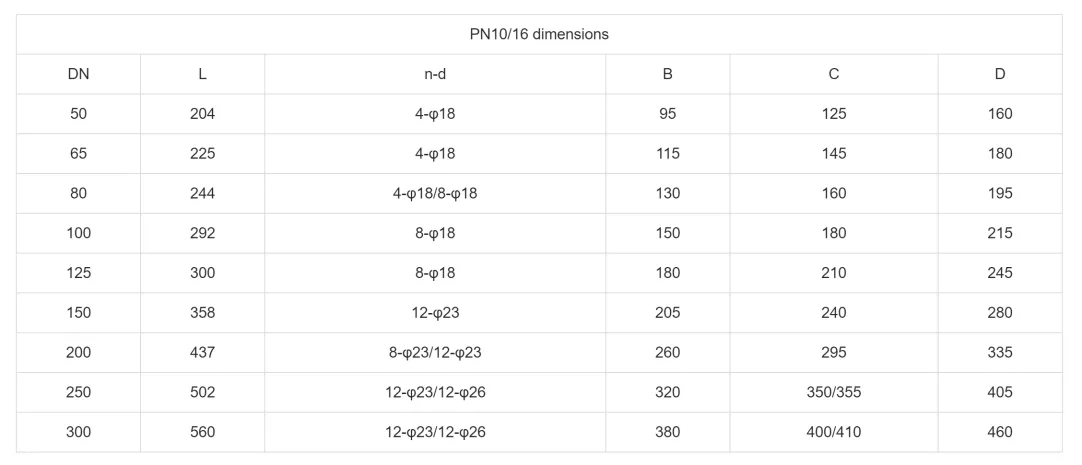
Ventil motýl s 36% průtokem pro efektivní regulaci kapaliny
Motýlové ventily a jejich význam Motýlové ventily jsou jedním z nejefektivnějších a nejběžněji použí

veitsen porttiventtiilityypit
Knife gate -venttiilit ovat erityinen venttiilityyppi, joka on suunniteltu erityisesti kiinteiden ja

Válvula de nível de água para controle eficiente em sistemas hidráulicos
A Importância da Válvula de Nível de Água No contexto da engenharia hidráulica e do gerenciamento de
 English